Best Microphones for Podcasting: How to Choose
By the editorial team · Updated September 30, 2026 · 8 min read
Most podcast audio problems come from the room and the microphone technique, not from a lack of expensive gear. The right microphone is the one that suits your space, your budget and the gear you already own.
This guide explains the decisions that matter, then lists recommendation slots you can fill with verified products. Each pick is described by its documented type and intended use, not by personal testing.
Quick recommendations
- Best for untreated rooms: Shure SM58 Pro XLR Dynamic Vocal Microphone See current Amazon price →
- Best for beginners: Logitech Creators Blue Yeti USB Microphone for PC, Mac, Gaming, Recording, Streaming, Podcasting, Studio and Computer Condenser Mic with Blue VO!CE effects, 4 Pickup Patterns, Plug and Play – Blackout See current Amazon price →
- Best for quiet, treated rooms: MAONO PM320S Condenser PC Microphone with XLR Cable, Boom Arm, Pop Filter See current Amazon price →
Comparison table
| Product | Best for | Type | Connectivity | Key feature | Amazon |
|---|---|---|---|---|---|
| Shure SM58 Pro XLR Dynamic Vocal Microphone | Live vocals and speech | Dynamic · Handheld · Cardioid | XLR | Cardioid dynamic vocal microphone with a built-in pop filter and a vocal-tailored frequency response | See current price → |
| Logitech Creators Blue Yeti USB Microphone for PC, Mac, Gaming, Recording, Streaming, Podcasting, Studio and Computer Condenser Mic with Blue VO!CE effects, 4 Pickup Patterns, Plug and Play – Blackout | Podcasting, streaming and voice recording at a desk | USB condenser · 4 pickup patterns | USB (plug and play), 3.5 mm headphone output | Plug-and-play, Three condenser capsules with four pickup patterns and a zero-latency headphone output | See current price → |
| MAONO PM320S Condenser PC Microphone with XLR Cable, Boom Arm, Pop Filter | Podcasting, streaming and vocal recording | Condenser · Cardioid · XLR | XLR (needs 48V phantom power) | Cardioid XLR condenser kit with boom arm, shock mount and pop filter | See current price → |
Our picks, explained
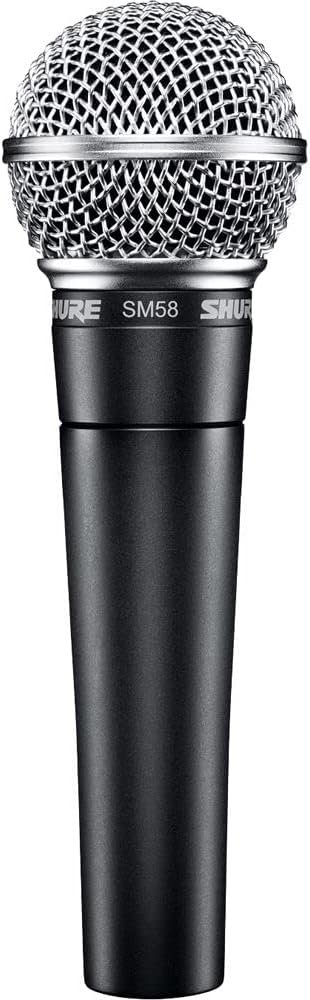
Best for untreated rooms
Shure SM58 Pro XLR Dynamic Vocal Microphone
A classic handheld dynamic vocal microphone with a cardioid pickup pattern and a built-in spherical pop and wind filter. It has a frequency response tailored for vocals and an XLR connection, and suits live singing, speech, studio recording and podcasting.
Pros
- Industry-standard vocal microphone used on stages and in studios
- Frequency response tailored for vocals, with a brightened midrange and bass roll-off
- Uniform cardioid pickup that reduces feedback and background noise
- Built-in spherical pop and wind filter
- Rugged die-cast metal body and steel mesh grille
- Pneumatic shock mount reduces handling noise
- No phantom power needed, so it works with any mixer or interface
- Works well in noisy environments thanks to the dynamic design
- Includes a stand adapter that rotates 180°
Cons
- Limited high-frequency range (to 15 kHz) compared with condenser microphones
- Low output, so it needs a clean, high-gain preamp
- Isn't ideal for recording instruments
- Cable may not be included, so check the listing
- Best used close to the mouth, as the cardioid pattern falls off quickly with distance
- Check the Amazon listing for the current price, as it varies (US$109.00 on a recent Amazon page)
Who it is for: Singers, speakers, podcasters, worship teams and live performers who want a durable, proven dynamic microphone. It suits anyone with a mixer or audio interface who values reliability and feedback rejection.
Who should skip it: Anyone who needs a plug-and-play USB microphone, a detailed wide-range condenser sound, or a built-in on/off switch. A USB microphone or a condenser is a better fit.
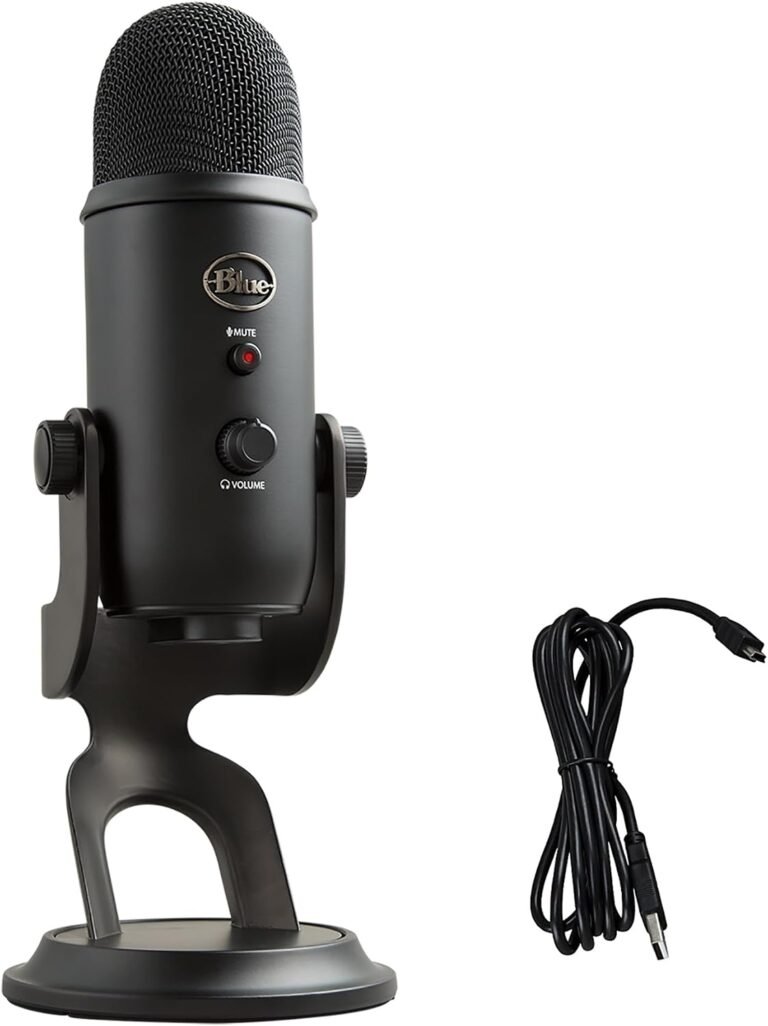
Best for beginners
Logitech Creators Blue Yeti USB Microphone for PC, Mac, Gaming, Recording, Streaming, Podcasting, Studio and Computer Condenser Mic with Blue VO!CE effects, 4 Pickup Patterns, Plug and Play – Blackout
A plug-and-play USB condenser microphone with three capsules and four pickup patterns (cardioid, bidirectional, omnidirectional and stereo). It has a mute button, gain control and a zero-latency headphone output, and it comes with a desktop stand.
Pros
- Plug and play over USB, with no interface or phantom power needed
- Four pickup patterns for solo, interview or room recording
- Three condenser capsules for rich, detailed sound
- Zero-latency headphone output for monitoring
- Gain control and a mute button on the microphone
- Sturdy desktop stand included
- Blue VO!CE effects and voice filters through Logitech software
- Very popular and well rated, about 4.6 out of 5 from over 33,000 ratings
Cons
- Limited to 16-bit audio at 48 kHz
- Large and heavy at about 1.55 kg with the stand
- Picks up room and keyboard noise, especially in omnidirectional or stereo modes
- USB only, with no XLR output
- Needs a quiet room for the best results
- Price varies widely (US$104.12 on a recent Amazon listing, down from $139.99, and S$136.12 on Amazon Singapore)
- Check the Amazon listing for the current price
Who it is for: Beginners, podcasters, streamers and gamers who want one plug-and-play microphone with several pickup patterns. It suits anyone who wants to record at a desk with no extra gear.
Who should skip it: Anyone who wants an XLR microphone, 24-bit recording, or a compact microphone for a boom arm or small desk. A smaller USB microphone or an XLR setup is a better fit.
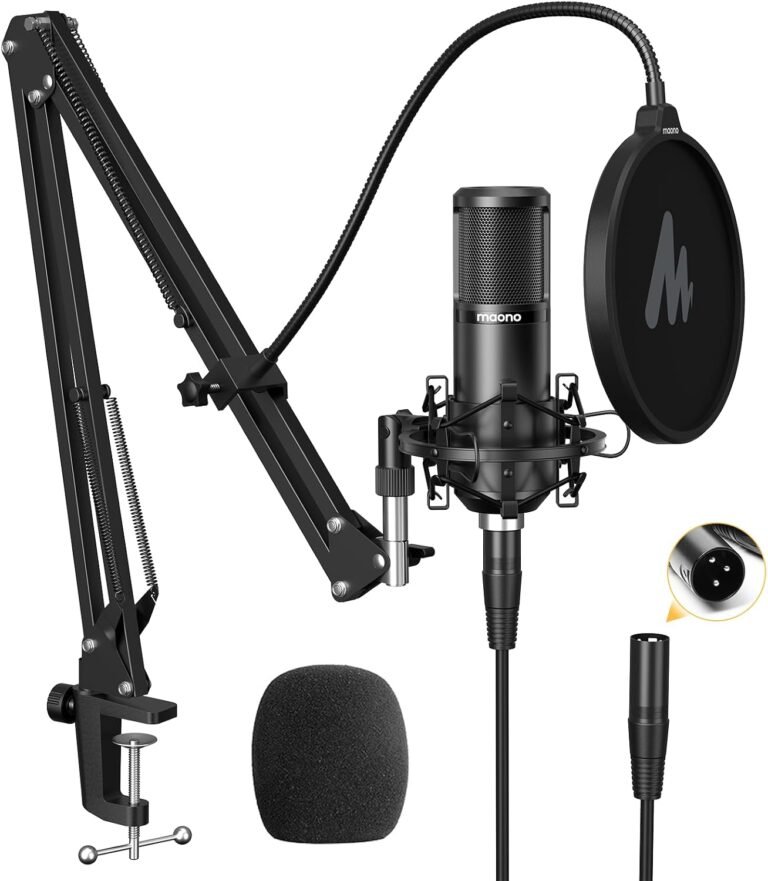
Best for quiet, treated rooms
MAONO PM320S Condenser PC Microphone with XLR Cable, Boom Arm, Pop Filter
A cardioid XLR condenser microphone kit with a 16 mm capsule and full metal body. It needs 48V phantom power from a mixer or audio interface, and the kit includes a boom arm, shock mount, pop filter and a 98-inch XLR cable.
Pros
- Cardioid pattern reduces room noise and focuses on the voice
- Large 16 mm condenser capsule with good detail
- Handles loud sources, with a 140 dB SPL maximum level
- Full metal body for durability
- Boom arm, shock mount, pop filter and cable in the kit
- Long 98-inch XLR cable
- Standard 3-pin XLR works with any mixer or interface that supplies 48V
- Affordable studio-style microphone for podcasts, streams and vocals
- Rated about 4.4 out of 5 on Amazon South Africa, from nearly 1,900 ratings
Cons
- Needs 48V phantom power, so you must own a mixer or audio interface
- No USB connection, so it won't plug straight into a computer
- Frequency response and signal-to-noise figures differ across sources
- Contents of the kit have changed between listing versions
- Condenser microphones pick up room noise, so a quiet space helps
- Check the Amazon listing for the current price, as it varies by region (R2,261.16 on Amazon South Africa)
Who it is for: Podcasters, streamers and home vocalists who already have an audio interface or mixer with phantom power. It suits anyone who wants an affordable complete microphone kit with a boom arm and pop filter.
Who should skip it: Anyone without an interface or mixer, or who wants a plug-and-play USB microphone. A USB microphone, or this microphone paired with an XLR-to-USB interface, is a better fit.
How we evaluate microphones
We compare manufacturer-documented specifications, connection type, intended use and the equipment each microphone requires. We do not claim hands-on testing unless a review says so explicitly.
Dynamic or condenser?
Dynamic microphones are less sensitive, so they pick up less of the room. That makes them a common recommendation for homes and offices with echo or background noise.
Condenser microphones capture more detail but also more of the space around you. They shine in quiet, treated rooms.
USB or XLR?
USB microphones connect straight to a computer, which keeps costs and complexity low. XLR microphones need an interface or mixer but let you upgrade each part of the chain separately.
What else to budget for
Plan for a boom arm or stand, a pop filter, and headphones. XLR microphones also need a cable and an interface or mixer with enough clean gain.
Frequently asked questions
What microphone do most podcasters use?
There is no single standard. Dynamic XLR and USB microphones are both very common.
Do I need an audio interface?
Only for XLR microphones. USB microphones connect directly.
How far should I sit from the microphone?
Close, typically a few fingers to a hand's width away, but follow your microphone's manual.
Final recommendations
If your room is untreated, start with a dynamic microphone. If you want the simplest setup, choose a USB microphone. Choose a condenser once your recording space is quiet.
Related guides
Microphones · 5 min read
XLR vs USB Microphones: Which Should You Choose?
XLR or USB? Compare cost, flexibility, sound and setup to decide which microphone type suits your show.
Read the guideMicrophones · 5 min read
Dynamic vs Condenser Microphones for Voice
Dynamic or condenser? Learn how each microphone type behaves in real rooms and which suits podcasting, radio and voice-over.
Read the guideAudio Interfaces · 6 min read
Best Audio Interfaces for Beginners
What a beginner needs from an audio interface: inputs, preamp gain, monitoring and connectivity explained.
Read the guide