Best Audio Interfaces for Beginners
By the editorial team · Updated September 30, 2026 · 6 min read
An audio interface is the box between your XLR microphone and your computer. A beginner needs one that is quiet, simple, and has enough inputs for the show they run today.
Quick recommendations
- Best for solo and two-person shows: Behringer TUBE ULTRAGAIN MIC500USB See current Amazon price →
Comparison table
| Product | Best for | Type | Connectivity | Key feature | Amazon |
|---|---|---|---|---|---|
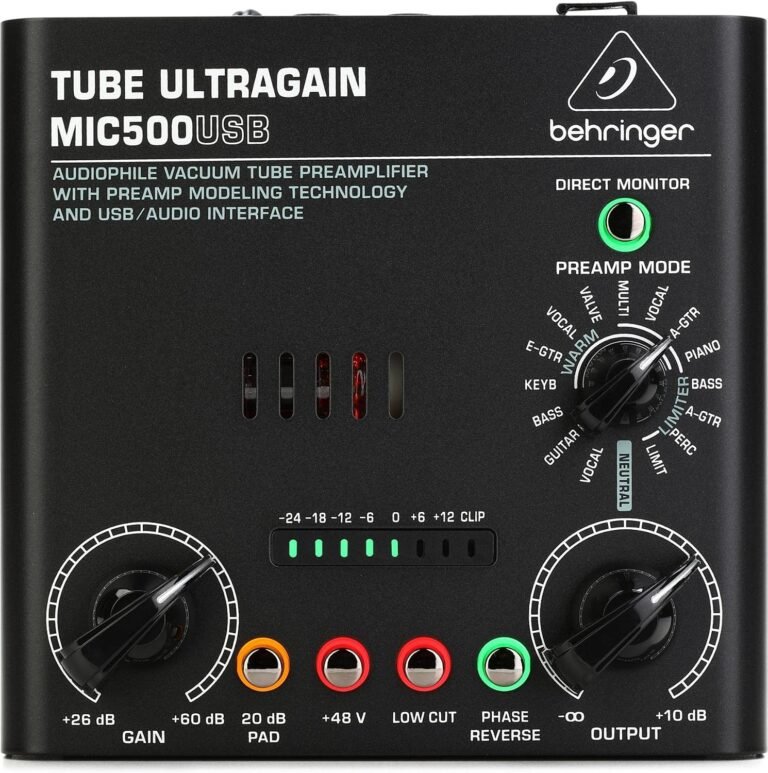
| Behringer TUBE ULTRAGAIN MIC500USB | Home recording and podcasting | Vacuum tube preamp · USB audio interface | USB (works with laptops and smartphones) | Tube preamp with 16 modeled voicings and a built-in USB interface | See current price → |
Our picks, explained
Best for solo and two-person shows
Behringer TUBE ULTRAGAIN MIC500USB
A desktop vacuum tube preamp with 16 modeled preamp voicings and a built-in USB audio interface. It records vocals, instruments and line-level sources to a computer, and Behringer provides recording, editing and podcasting software as a free download.
Pros
- Real vacuum tube preamp in a compact desktop unit
- 16 preamp voicings for guitars, bass, keyboards, drums and vocals
- Built-in USB interface that connects straight to a computer
- Works with microphones, instruments and line-level sources
- Designed for studio-grade condenser microphones
- Free recording, editing and podcasting software included
- 150 instrument and effect plug-ins available as a free download
- Affordable, at about $84 on one Amazon US listing
- Rated 4.2 out of 5 on Amazon from 84 ratings
Cons
- Shown as unavailable on the Amazon Australia and UK listings
- Needs a mains power connection, so it isn't bus-powered
- Detailed specs such as inputs and phantom power aren't listed on the Amazon pages
- Software and plug-ins must be downloaded from behringer.com
- Prices vary a lot between regions and sellers, so check the current price
- Amazon lists it in a small number of reviews, so check recent feedback before buying
Who it is for: Home studio users, podcasters and streamers who want a tube-flavored mic preamp and a USB interface in one unit on a budget. It also suits musicians who want to try different preamp voicings when recording guitars, bass or vocals.
Who should skip it: Anyone who needs multiple simultaneous inputs or a portable bus-powered interface. People who need verified, detailed specs before buying should check the manufacturer's page first.
Inputs and outputs
Count how many microphones you will record at once. Add one more if a guest may join. Also check for a headphone output with its own volume control.
Preamp gain
Dynamic microphones often need more gain than condensers. Check the maximum gain in the specification and read the microphone’s requirements.
Direct monitoring
Direct monitoring lets you hear yourself with no delay, which avoids the distraction of latency while recording.
Connection and compatibility
Confirm the connection type against your computer’s ports and check operating system support.
Frequently asked questions
How many inputs do I need?
One per person recording at the same time, plus one spare if guests join.
Does an interface improve sound quality?
It provides cleaner preamps and conversion than most built-in computer inputs.
Final recommendations
Choose an interface that covers your current number of microphones, has enough clean gain for your microphone, and offers direct monitoring.
Related guides
Mixers & Audio Consoles · 5 min read
Audio Interface vs Mixer: Which Do You Need?
Compare audio interfaces and mixers for podcasting and broadcasting: size, control, inputs and workflow.
Read the guideMicrophones · 8 min read
Best Microphones for Podcasting: How to Choose
How to choose a podcasting microphone: dynamic vs condenser, USB vs XLR, and what to check before you buy.
Read the guide